
Edge protection profiles are widely used in furniture, panels, office equipment, cabinets, and fabricated interiors. Although an edge strip looks simple after installation, its consistency depends on polymer selection, profile geometry, extrusion temperature, cooling, cutting, and dimensional inspection. The manufacturing discussion around Plastic Edge Trim is therefore moving toward repeatable profile control.
For manufacturers serving furniture and equipment industries, this matters when customers repeat the same profile across batches. Small changes in thickness, lip geometry, hardness, or surface finish can affect how the trim fits an edge.
Different polymers behave differently during extrusion. PVC is widely used for edge profiles because formulations can be adjusted for flexibility, hardness, color, and surface appearance. ABS can provide a harder profile and different surface characteristics, while TPE can suit applications requiring greater flexibility.
These differences influence processing conditions and the finished profile. Resin formulation, additives, pigments, and hardness targets need to match the extrusion process. A manufacturer producing Plastic Edge Trim for different applications may therefore use several material formulations instead of treating every profile alike.
|
Material |
Typical Profile Character |
Production Consideration |
Common Application Direction |
|
PVC |
Adjustable hardness and flexibility |
Formulation and temperature control |
Furniture and panel edges |
|
ABS |
Relatively rigid surface |
Stable melt flow and cooling |
Equipment and furniture components |
|
TPE |
Flexible and resilient |
Controlled extrusion and dimensional recovery |
Curved or contact edges |
Profile extrusion begins by feeding polymer compound into an extruder, where heat and mechanical pressure create a controlled material flow. The molten material then passes through a die that defines the cross-sectional shape.
The die is a key production point for Plastic Edge Trim. Its geometry determines wall thickness, gripping lips, channels, and decorative surfaces. Uneven material flow can create dimensional variation or surface defects, so production teams monitor temperature, pressure, and line speed according to the material and profile.
Cooling follows extrusion and helps the profile retain its intended dimensions. Cooling conditions need to match extrusion speed and geometry because uneven cooling can influence shrinkage and shape stability.
An edge trim may cover a raw edge, provide a finished appearance, improve component contact, or protect an exposed surface. The profile therefore needs to match the edge shape and installation method.
A U-shaped section may grip a board edge, while a flexible lip can accommodate minor dimensional variation. A decorative profile may require tighter control of visible surfaces, and a curved application may require greater flexibility.
This is why Plastic Edge Trim cannot be evaluated only by its outer appearance. Internal dimensions, wall thickness, hardness, and flexibility can affect installation even when two profiles look similar.
Visual inspection can identify scratches, bubbles, discoloration, deformation, and other surface defects. Dimensional inspection addresses a different group of production risks. Width, height, wall thickness, opening size, and lip dimensions can influence fit and retention.
For Plastic Edge Trim, manufacturers can use calipers, gauges, profile templates, or other measurement methods suited to the geometry. Production sampling can be tied to customer specifications and approved samples.
Surface finish also requires control when the trim remains visible. Gloss, texture, and color consistency can change with formulation and extrusion conditions. Linking these characteristics to an approved reference gives production teams a practical standard for repeat orders.
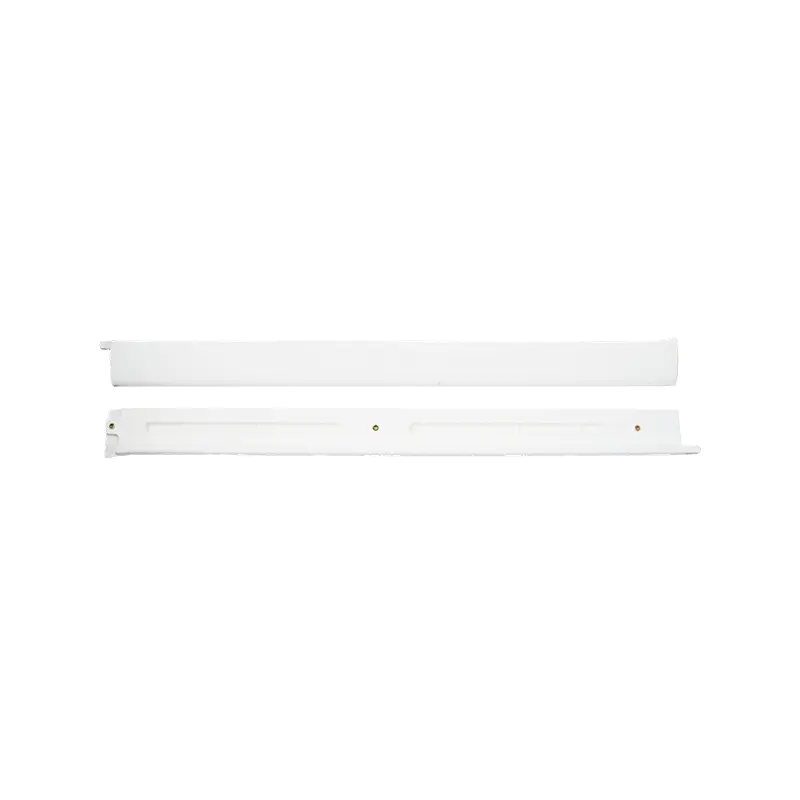
Custom extrusion is common when standard profiles do not match a panel thickness, installation method, or visual requirement. Developing a Plastic Edge Trim profile generally involves a cross-sectional drawing, material selection, die development, and sample testing.
The trial stage can expose issues that are not obvious on a drawing. A gripping lip may need a different thickness, a channel may require more clearance, or a profile may need greater flexibility around a curved edge. These adjustments are part of profile development rather than cosmetic changes.
For repeat B2B production, an approved drawing, material specification, color reference, and sample can provide consistent references for later batches.
Long production runs place greater emphasis on stable extrusion conditions. Material preparation, temperature control, line speed, cooling, cutting length, and packing can all affect consistency between batches.
For buyers sourcing Plastic Edge Trim, repeatability matters when the same profile is installed across many units or reordered over time. A stable process helps reduce unnecessary variation and makes the approved sample more useful as a production reference.
The development of edge protection profiles reflects a wider direction in plastics manufacturing: components with simple appearances increasingly depend on controlled materials, tooling, and profile extrusion conditions. As furniture, equipment, and panel manufacturers use more specialized edge treatments, profile accuracy becomes a manufacturing consideration alongside color and surface appearance.



Product Categories
Contact Us

+86-13586020128

No. 118, Xiangnv Road, Chengjiang Street, Huangyan District, Taizhou City, Zhejiang Province, China
Ready to Begin?
Get in Touch

Now!

BONUO
 English
 русский
 Español
 عربى

